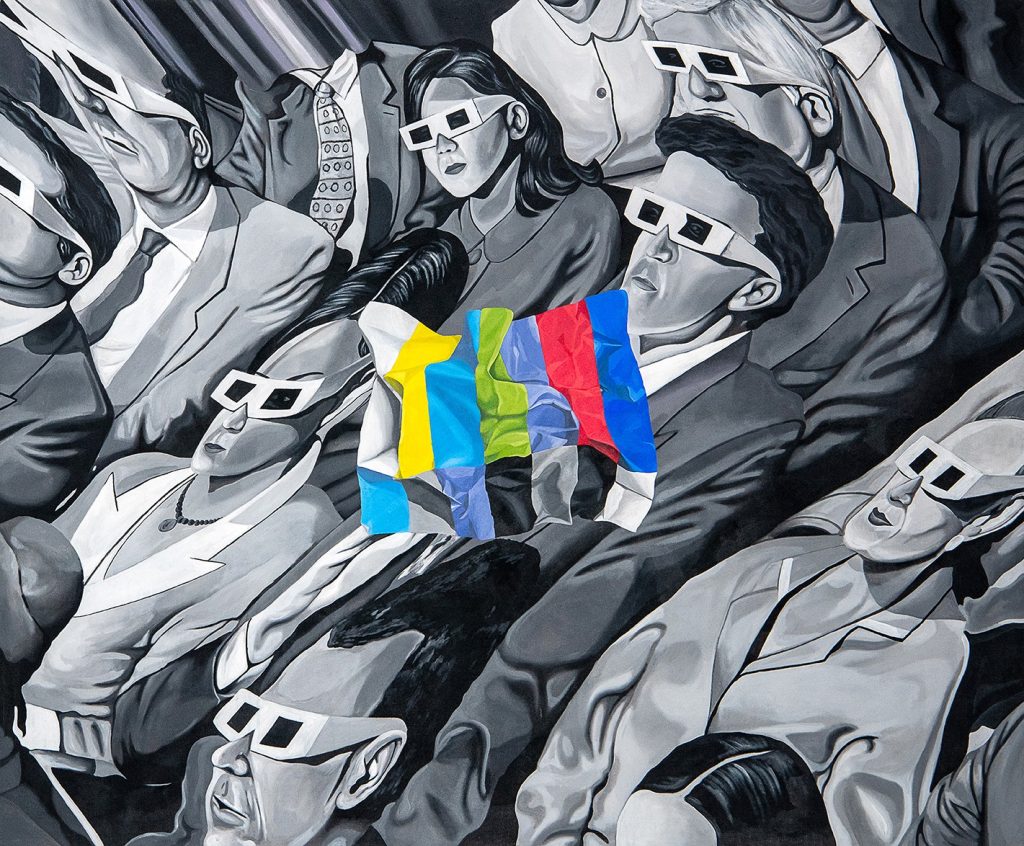
The revolution will not be televised
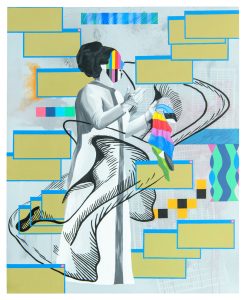
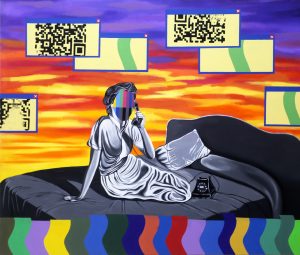
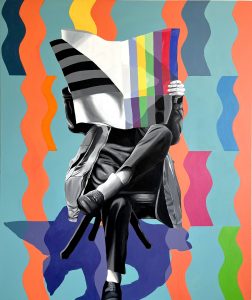
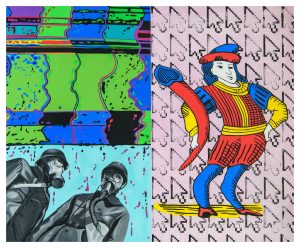
The “The revolution will not be televised” by Moroccan artist Hicham Matini, inspired by a Gil Scott-Heron poem and of the same name–decodes pop culture and virulently critiques mass media. The distortion of the spectators that one sees in the painting reflects the reality of the media as seen through the prism of television, where information is often distorted.
The « show » builds and destroys reputations in the service of political power, lobbies and pressure groups. Information is locked, controlled, and distorted by power, which can be observed in Matini’s painting.
In On Television by the French sociologist Pierre Bourdieu, he exposes the invisible mechanisms of manipulation and censorship that determine what appears on the small screen. “Time, on television, is an extremely rare commodity. When you use up precious time to say banal things, to the extent that they cover up precious things, these banalities become in fact very important.”
The principle that determines the selection of those “banalities” is “the search for the sensational and the spectacular. Television calls for dramatization, in both senses of the term: it puts an event on stage, puts it in images. In doing so, it exaggerates the importance of that event, its seriousness, and its dramatic, even tragic character.”
Bourdieu also states in his book “So much emphasis on headlines and so much filling up of precious time with empty air–with nothing or almost nothing–shunts aside relevant news, that is, the information that all citizens ought to have in order to exercise their democratic rights.”
Furthermore, television, “which claims to record, becomes the instrument for creating reality: making people see, making people believe. Searching for the best images, the best speakers. Television becomes the arbiter of access to social existence and political.” This can lead to diversions. »